Lessons From Kwame Brathwaite’s Work Featured in "Giants: Art From the Dean Collection of Swizz Beatz and Alicia Keys"
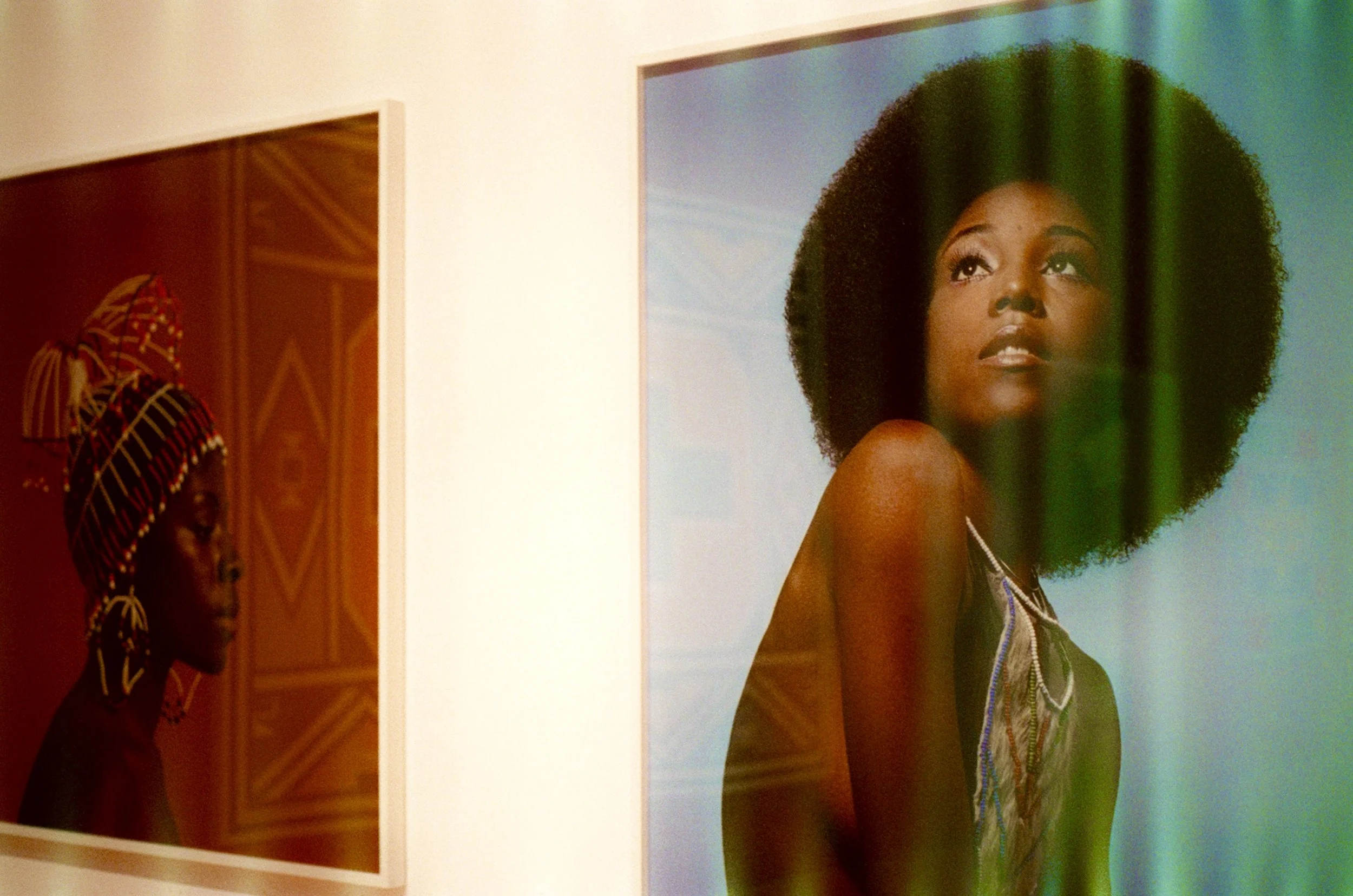
“Untitled (Radiah Frye Who Embraced Natural Hairstyles at AJASS Photoshoot), 1970”
On Friday, August 7th, the Museum of Contemporary Art San Diego (MCASD) hosted its closing celebration for the exhibition of “Giants: Art from the Dean Collection of Swizz Beatz and Alicia Keys.” The collection, debuting at MCASD for the first time on the West Coast, features more than 130 works of art from 37 Black American and diasporic artists from Africa, Europe, the United States and the Caribbean.
One of the 37 artists featured is Kwame Brathwaite, one of the most defining photographers and activists of the 20th century. His work, spanning across music, activism, fashion and art, championed the “Black Is Beautiful” movement and is strongly rooted in the preservation and empowerment of Black culture. For over six decades, Brathwaite used photography as a vehicle to advocate for the celebration of Blackness in all of its forms. His art and career exemplify the power of using photography as an essential tool to visually manifest and disseminate ideas that drive cultural and political change, while simultaneously inspiring confidence and appreciation for one’s history.
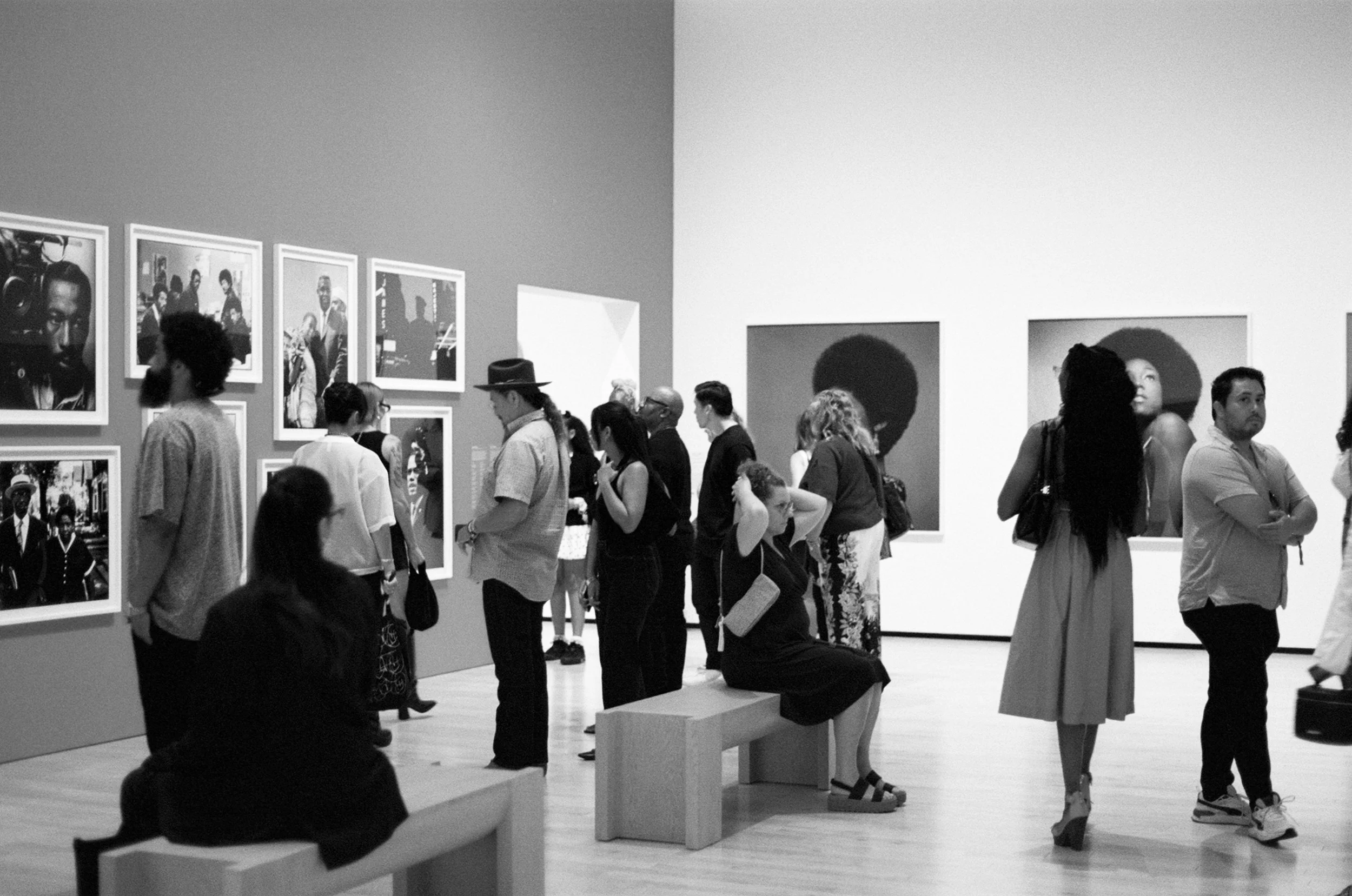
Attendees admiring the work of Kwame Brathwaite and Gordon Parks at the closing celebration for Giants.
Inspired by the teachings of black nationalist leader Marcus Garvey, Brathwaite and his brother Elombe Brath co-founded the Africa Jazz-Art Society and Studios (AJASS), which united many young Black artists under the common mission of creating social change through racial uplift and economic independence. Amidst mass anti-Black racism and violence, as well as a lack of representation of Black culture in the media, Brathwaite and Brath sought to challenge dominant Eurocentric narratives in beauty standards and fashion, conveying to wider audiences that natural, unabridged Black culture and history deserved to be highlighted, captured and made a centerpiece in fashion and art.
“Untitled (Radiah Frye Who Embraced Natural Hairstyles at AJASS Photoshoot), 1970” showcases Brathwaite’s exceptional talent for making language visible. As the middle image of Brathwaite’s three works on display in the Giants collection, the piece instantly epitomizes the “Black Is Beautiful” movement. Kwame Samori Brathwaite, director of the Kwame Brathwaite Archive and son of Kwame Brathwaite, emphasizes how different aspects of the image achieve this during an interview with MCASD: “There is this evenness of her skin tone, the look on her face is just this insightful, hopeful view of the world in which she’s in, as well as the emphasis on this piece of African fashion she is wearing around her neck.”
One of the prominent themes in the Giants collection is the powerful truth that representation is resistance. Through his work, Brathwaite achieved a well-rounded, self-determined narrative that affirmed Black culture. This representation goes far beyond aesthetics: using fashion as a unique avenue of activism allowed wider audiences to easily digest Black nationalist thought and embed it into mainstream society. Brathwaite's work is a masterclass for anyone seeking to battle the ever-present forces of racism, discrimination, violence and prejudice. It's proof that art is a powerful vehicle for activism, one that combats negative forces while uplifting those under attack.
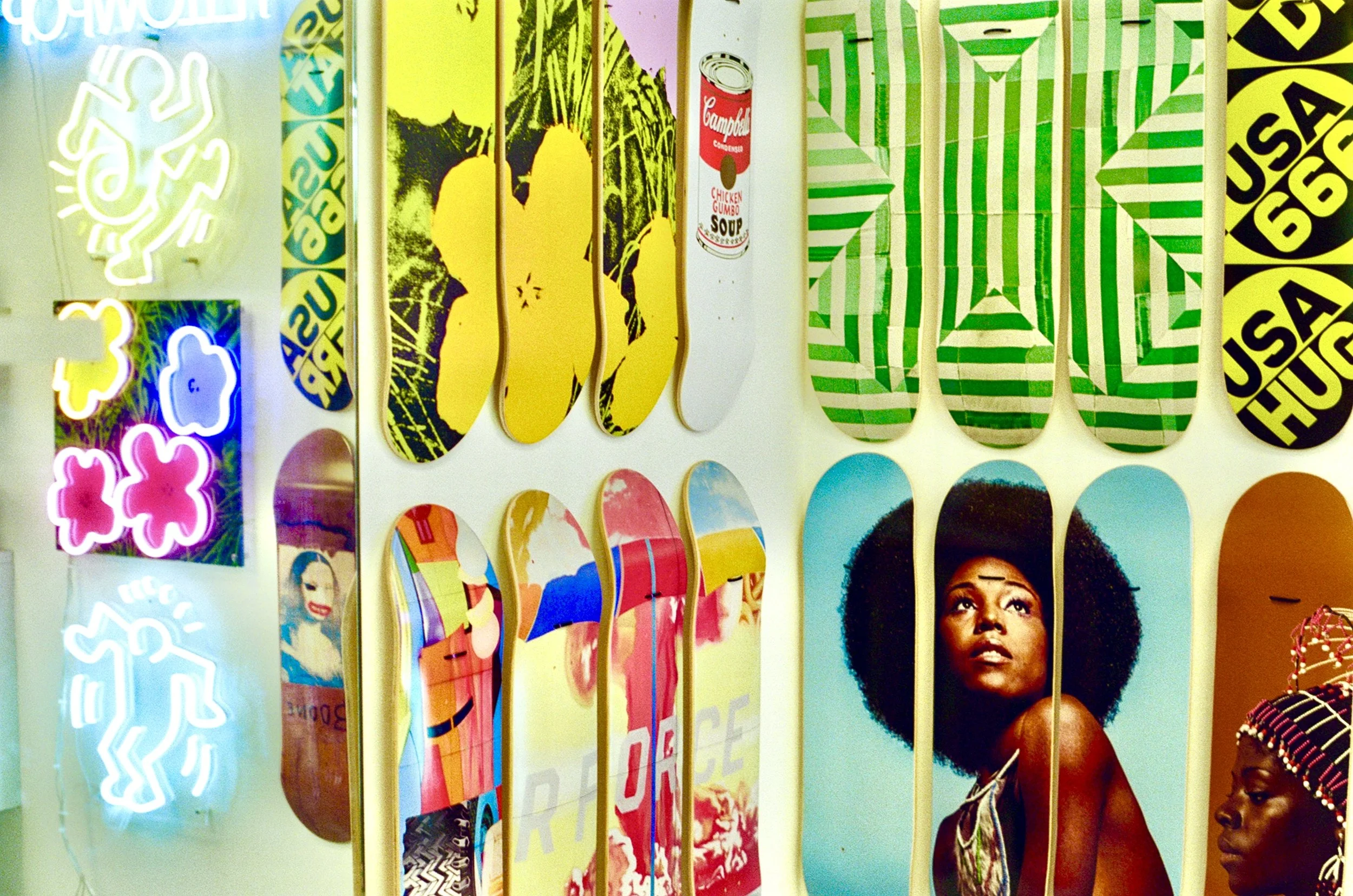
“Untitled (Radiah Frye Who Embraced Natural Hairstyles at AJASS Photoshoot), 1970” featured on skateboard art at the Museum of Contemporary Art San Diego (MCASD)
